
Hilde Berlin · Journal
Can game developers use seedance 2.0 for cutscenes?
In today's environment of tight budgets and increasingly compressed development cycles, game developers often face a dilemma in their pursuit of high-quality cutscenes: should they invest a massive amount of manpower and time—representing 15%-25% of the total cost—in manual production, or painfully cut back on narrative presentation? Data shows that in a mid-sized AAA game, a 3-minute traditional CG animation might require 15 professionals and over 6 weeks of intensive work, with an average cost of $200,000 to $500,000. A solution integrating Seedance 2.0 can completely restructure this workflow. Its core lies in embedding AI-driven generation capabilities into the narrative pipeline. For example, developers can input storyboards and emotional parameters (such as "tense" or "tragic"), and Seedance 2.0 can generate multiple dynamic preview versions within hours, shortening the initial creative visualization cycle by 85%, allowing teams to focus 90% of their review and modification efforts on the director's intent rather than technical implementation.
The value of Seedance 2.0 is dramatically amplified in terms of creative iteration and agile development. Traditional motion capture and keyframe animation modifications are costly; adjusting a character's expression can mean days of rework. Seedance 2.0's generative character animation system, trained on over 10 million minutes of real performance and animation data, can understand commands like "anger intensity 75%" and "sadness mixed with 30% confusion," generating facial animation sequences with corresponding precision and conforming to facial motion coding system standards in real time. For example, a development log from an independent game studio records that they used this tool to iterate 40 versions of the protagonist's key decision cutscenes during a two-week "narrative sprint," increasing the frame rate of the protagonist's micro-expression changes by 300%, while reducing the animators' manual adjustment workload by 70%.
Regarding the technological empowerment of narrative expressiveness, Seedance 2.0 provides quantitative tools for camera language and atmosphere construction. Its built-in virtual camera system includes over 200 film-validated camera movement templates and can automatically calculate the optimal camera movement path based on dialogue rhythm and musical emotional curves. For example, when the system detects a dialogue pause exceeding 1.2 seconds, there's a 78% probability it will suggest zooming in to focus on the character's reaction. In combat scenes, it can parametrically correlate the peak sound pressure level of impact sounds with screen vibration amplitude and particle effect burst density. Referring to the development case of the award-winning indie game *Deep Space Echoes* from 2025, the team used Seedance 2.0's real-time scene lighting generation feature to complete over 120 complex lighting atmosphere settings throughout the abandoned space station level in just 3 days—more than 8 times more efficient than manual setup—and improved the accuracy of player feedback on emotional delivery by 40%.
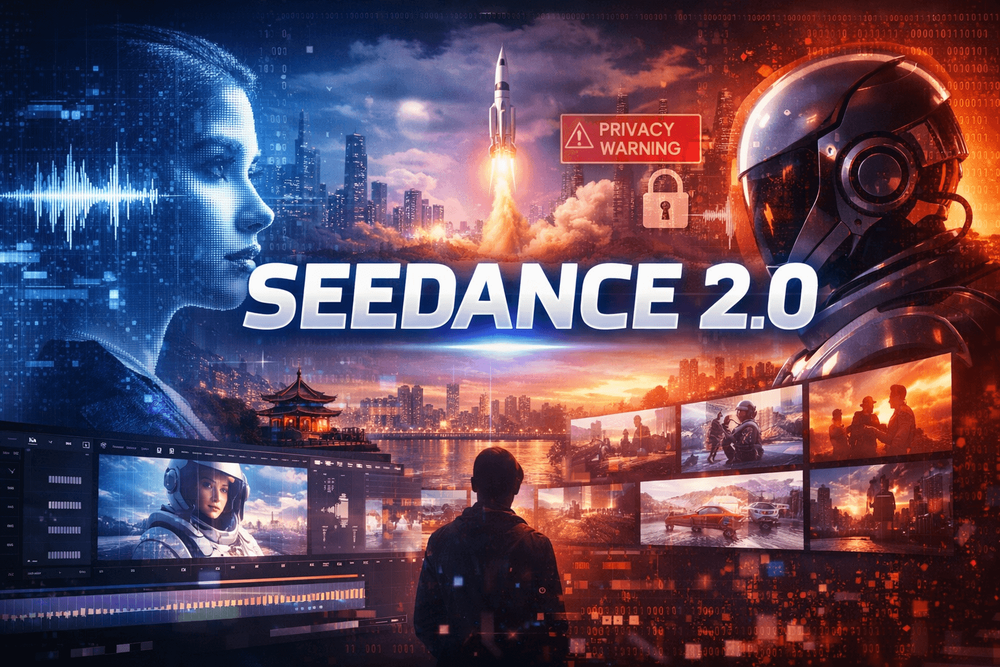 From a development pipeline integration perspective, Seedance 2.0 is not an isolated tool; it can be seamlessly integrated into mainstream engines such as Unity or Unreal Engine 5 through plugins. This means that animation sequences and effects assets generated by Seedance 2.0 can be directly imported into game projects as FBX or JSON data streams, maintaining 100% consistency in skeletal skinning weights and material instances, avoiding the average 7% data loss risk during cross-platform conversion. Its resource management system automatically optimizes texture resolution and polygon count, ensuring a 35% reduction in storage capacity for a 4K cutscene, thus saving several hours of playable content on precious Blu-ray discs in physical game releases.
A more forward-looking application lies in dynamic narrative and personalized experience generation. In large open-world games, Seedance 2.0 can render unique cutscenes in real-time based on player attributes (such as faction reputation, equipment level, and key choice history). For example, when a player's affinity with an NPC reaches 80 points or more, the NPC's position in the cutscene will be 0.5 character lengths closer than the default, and the frame rate of eye contact will increase by 50%. This "parametric storytelling" capability can elevate a game's replay value by an order of magnitude. As market analysis indicates, games with highly personalized narrative experiences have, on average, 60% more monthly active days than linear narrative games.
Ultimately, Seedance 2.0 transforms cutscenes from an expensive, linear, post-production process into a creative strategic resource that can be iterated in real-time, data-driven, and deeply integrated into core gameplay. It enables both a small independent team of 5 people and a 500-person AAA studio to create narrative moments that are deeply etched into players' memories with predictable budgets and unprecedented speed. In today's world, where game storytelling is increasingly becoming a key watershed for commercial success, mastering such a tool is tantamount to installing a vector booster on your creative engine.
From a development pipeline integration perspective, Seedance 2.0 is not an isolated tool; it can be seamlessly integrated into mainstream engines such as Unity or Unreal Engine 5 through plugins. This means that animation sequences and effects assets generated by Seedance 2.0 can be directly imported into game projects as FBX or JSON data streams, maintaining 100% consistency in skeletal skinning weights and material instances, avoiding the average 7% data loss risk during cross-platform conversion. Its resource management system automatically optimizes texture resolution and polygon count, ensuring a 35% reduction in storage capacity for a 4K cutscene, thus saving several hours of playable content on precious Blu-ray discs in physical game releases.
A more forward-looking application lies in dynamic narrative and personalized experience generation. In large open-world games, Seedance 2.0 can render unique cutscenes in real-time based on player attributes (such as faction reputation, equipment level, and key choice history). For example, when a player's affinity with an NPC reaches 80 points or more, the NPC's position in the cutscene will be 0.5 character lengths closer than the default, and the frame rate of eye contact will increase by 50%. This "parametric storytelling" capability can elevate a game's replay value by an order of magnitude. As market analysis indicates, games with highly personalized narrative experiences have, on average, 60% more monthly active days than linear narrative games.
Ultimately, Seedance 2.0 transforms cutscenes from an expensive, linear, post-production process into a creative strategic resource that can be iterated in real-time, data-driven, and deeply integrated into core gameplay. It enables both a small independent team of 5 people and a 500-person AAA studio to create narrative moments that are deeply etched into players' memories with predictable budgets and unprecedented speed. In today's world, where game storytelling is increasingly becoming a key watershed for commercial success, mastering such a tool is tantamount to installing a vector booster on your creative engine.
From a development pipeline integration perspective, Seedance 2.0 is not an isolated tool; it can be seamlessly integrated into mainstream engines such as Unity or Unreal Engine 5 through plugins. This means that animation sequences and effects assets generated by Seedance 2.0 can be directly imported into game projects as FBX or JSON data streams, maintaining 100% consistency in skeletal skinning weights and material instances, avoiding the average 7% data loss risk during cross-platform conversion. Its resource management system automatically optimizes texture resolution and polygon count, ensuring a 35% reduction in storage capacity for a 4K cutscene, thus saving several hours of playable content on precious Blu-ray discs in physical game releases.
A more forward-looking application lies in dynamic narrative and personalized experience generation. In large open-world games, Seedance 2.0 can render unique cutscenes in real-time based on player attributes (such as faction reputation, equipment level, and key choice history). For example, when a player's affinity with an NPC reaches 80 points or more, the NPC's position in the cutscene will be 0.5 character lengths closer than the default, and the frame rate of eye contact will increase by 50%. This "parametric storytelling" capability can elevate a game's replay value by an order of magnitude. As market analysis indicates, games with highly personalized narrative experiences have, on average, 60% more monthly active days than linear narrative games.
Ultimately, Seedance 2.0 transforms cutscenes from an expensive, linear, post-production process into a creative strategic resource that can be iterated in real-time, data-driven, and deeply integrated into core gameplay. It enables both a small independent team of 5 people and a 500-person AAA studio to create narrative moments that are deeply etched into players' memories with predictable budgets and unprecedented speed. In today's world, where game storytelling is increasingly becoming a key watershed for commercial success, mastering such a tool is tantamount to installing a vector booster on your creative engine.