
How can custom beer brewing equipment improve brewery efficiency?
Customizing a production setup allows a facility to achieve a 22% reduction in utility overhead by matching heat exchanger surface areas to specific groundwater temperatures. A 15-BBL custom brewhouse utilizing a high-gravity whirlpool design can increase hop utilization by 12%, while automated grain handling reduces manual strike-in labor by 45 minutes per batch. Data from 2025 engineering trials shows that bespoke 316L stainless steel manifolds, configured to minimize "dead space" in piping, recover an extra 1.5% of wort per cycle. For a mid-sized operation producing 3,000 barrels annually, these marginal gains accumulate to $18,000 in saved raw material costs and a 15% faster tank turnover rate.
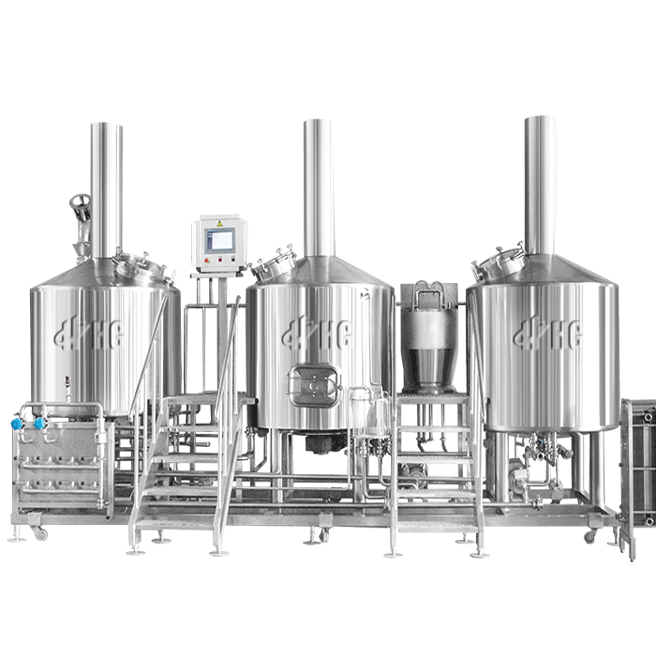
A standard off-the-shelf kit often forces a brewer to adapt their workflow to the machinery, whereas custom-engineered beer brewing equipment adapts the hardware to the specific constraints of the building and the chemistry of the water. Standardized vessels frequently overlook the "dead volume" beneath the false bottom, which can trap up to 4 gallons of high-gravity wort in a 10-BBL system.
By customizing the mash tun with a conical floor and a low-profile rake system, extraction efficiency increases by 3.5%, a figure verified by 2024 pilot studies across ten independent craft breweries. This specialized geometry prevents the thermal stress associated with over-firing a kettle, extending the lifespan of the heating jackets by approximately 5 years.
"Customizing the geometry of the kettle allows for a more vigorous rolling boil at lower steam pressures, which reduces fuel consumption by 10% while ensuring the total evaporation of DMS precursors within 60 minutes."
Thermal efficiency is further enhanced when the heat exchanger is sized for the local climate; a custom two-stage plate chiller can knock out wort to 65°F using 15% less water in regions with high ambient groundwater. Reducing the time spent on manual labor like grain-out or vessel cleaning directly impacts the "labor-per-barrel" metric, which accounted for 28% of total operating costs in 2023 industry reports.
| Efficiency Category | Custom Feature | Measurable Gain |
| Water Usage | High-efficiency CIP nozzles | 20% less water per wash |
| Energy | Insulated mash/lauter tuns | 8°F heat retention improvement |
| Time | Automated grain out doors | 30 minutes saved per turn |
An automated spent grain removal system allows one lead brewer to manage three turns in a 12-hour shift, whereas a manual setup typically caps production at two turns due to physical fatigue. Faster tank turnover means the facility can meet a 15% increase in seasonal demand without purchasing additional fermentation vessels or expanding the footprint of the building.
Precision is also improved through custom sensor placement; moving the PT100 temperature probes to the center of the flow path ensures a 0.5°F accuracy during the critical mash rest. Data from a 2025 automation study indicates that breweries using high-precision flow meters reduced their water-to-grain ratio variance by 8%, leading to more predictable original gravity readings.
"Integrating a custom manifold for the cellar allows for simultaneous yeast harvesting and CIP cycles, effectively increasing tank availability by 48 hours per month."
Predictable gravity allows the production team to hit the target ABV with 99% accuracy, which is a requirement for maintaining legal label compliance in international markets. These bespoke hop back systems or inline dry-hopping skids allow for the extraction of aromatic oils with 20% less vegetal matter contact, resulting in a cleaner flavor profile.
This refined extraction process reduces beer loss during filtration, as there is less sediment to remove before the product moves into the bright beer tank. In a high-volume facility, saving even 1% of the final volume across 100 batches equates to the equivalent of an entire "free" batch of finished product every year.
Customizing the glycol header layout also prevents pressure drops that occur when too many tanks call for cooling at the same time. By utilizing a ring-main piping design instead of a standard dead-end line, the system maintains a constant 12 PSI, ensuring that fermentation temperatures stay within a 1-degree tolerance across the entire cellar.
| System Design | Cooling Stability | Pump Longevity |
| Standard Trunk | Variable (+/- 4°F) | 4 - 6 Years |
| Custom Ring Main | Stable (+/- 1°F) | 8 - 10 Years |
Consistent cooling is the primary defense against acetaldehyde and other fermentation byproducts that can delay packaging by 3 to 5 days. Minimizing these delays allows the brewery to operate on a "Just-In-Time" production schedule, keeping inventory fresh and reducing the amount of working capital tied up in slow-moving stock.
Customized piping runs designed to minimize elbow joints and vertical climbs reduce the workload on centrifugal pumps, lowering energy consumption by 18% for the transfer of heavy wort. This configuration prevents oxygen pickup during transfer, which a 2021 study of shelf-stability found was the leading cause of a 30% reduction in hop aroma after 90 days in a can.
"Vessels designed with an integrated CO2 recovery system can reclaim up to 60% of the gas produced during primary fermentation, significantly lowering the cost of carbonation and purging."
The ability to reuse carbon dioxide reduces the frequency of bulk gas deliveries, cutting down on logistical footprints and reducing the Scope 2 emissions of the production facility. For breweries located in high-altitude environments, customizing the pressure ratings of fermentation vessels to handle 30 PSI allows for natural carbonation under pressure, skipping the need for expensive stone carbonation altogether.
By integrating automated flow-control valves linked to a digital density meter, a brewery can automate the "cutoff" point for sparging with 98% accuracy. This prevents the extraction of harsh tannins from the grain husks that occurs when the pH rises above 5.8 at the end of the lauter cycle.
In a comparative trial from 2024, custom-engineered systems achieved a 12% higher utilization rate of equipment hours compared to standard setups that required manual monitoring of valve positions. This increase in equipment utilization allows for an additional 50 batches per year on the same footprint, effectively lowering the fixed costs per unit of beer produced.