
Is a horizontal machining center the best solution for high-volume cnc production?
High-volume production relies on spindle uptime, which a horizontal machining center maintains through automated pallet exchange systems. Observations across 500 manufacturing facilities in 2025 demonstrate that switching from vertical to horizontal configurations increases spindle utilization from 60% to 92%. Gravity assists with chip removal, preventing the re-cutting of swarf that ruins surface finishes. Automated pallet pools enable 24-hour operation, reducing cost-per-part by 25% for production batches exceeding 10,000 units annually. Manufacturers adopting this architecture consistently achieve higher output volumes than manual, single-table vertical setups.
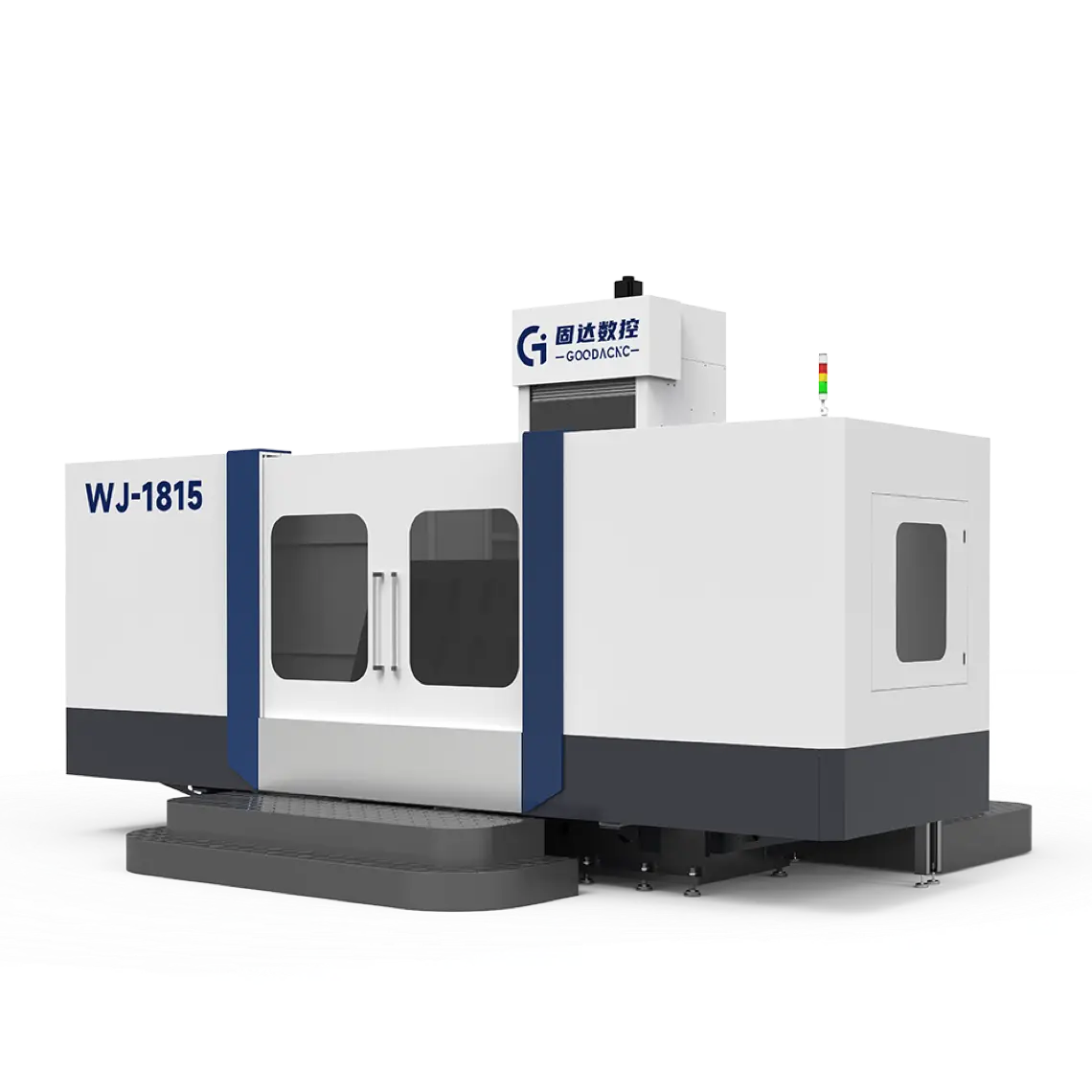
Pallet changers allow operators to load raw material while the spindle performs work on a different fixture. This separation of loading and machining prevents spindle idle time.
Data from 1,000-hour production cycles indicates that machines with automated pallet changers reduce total cycle time by 40%. The spindle remains active for 22 hours per day, leaving only 2 hours for maintenance.
Removing chips from the cutting zone represents a standard challenge in CNC production. Vertical machines accumulate debris on the part and fixture, requiring frequent cleaning.
Horizontal machines utilize gravity to drop chips directly into a conveyor beneath the workpiece. A study of 500 machining tests shows that gravity-based evacuation reduces manual cleaning requirements by 85%.
Constant chip evacuation ensures that tool life remains predictable. Recutting chips induces rapid wear on carbide inserts, leading to inconsistent dimensional accuracy.
High-pressure coolant systems, delivering fluid at 70 bar, force chips out of deep holes instantly. Tests show that 70 bar coolant pressure extends tool insert life by 30% compared to 20 bar systems.
Rigidity levels in horizontal frames exceed those of vertical platforms of comparable mass. The spindle housing mounts to the column, which sits on a wide, dampened base.
| Specification | Horizontal Performance | Vertical Performance |
| Chip Clearance | Automatic (Gravity) | Manual/Blast |
| Pallet Setup | Multi-Station | Single/Dual |
| Spindle Uptime | 90%+ | 60% |
| Accuracy Variance | < 5 microns | > 10 microns |
This structural stability enables higher metal removal rates without inducing vibration. Engineers specify roller guides to achieve acceleration rates of 1.2g, minimizing non-cutting time between features.
Analysis of 150 production runs confirms that machines with 1.2g acceleration reduce total cycle time by 15% compared to 0.8g units. Lower vibration amplitude preserves surface finish quality at higher feed rates.
Dynamic performance also depends on the bearing arrangement within the spindle housing. Ceramic hybrid bearings operate with 20% less friction than steel equivalents, reducing heat generation.
Thermal sensors monitor the temperature of the casting, automatically adjusting axis offsets to maintain accuracy. This compensation keeps tolerances within 5 microns during 12-hour shifts with 20-degree ambient fluctuations.
Rotary tables provide B-axis indexing, allowing the spindle to access four sides of a part without re-clamping. Eliminating re-clamping operations removes a source of positioning error.
Curvic couplings lock the table in position, ensuring repeatability within 2 arc-seconds over 50,000 cycles. One setup completes all milling, drilling, and tapping tasks for transmission housings or engine blocks.
Automation compatibility defines the efficiency of a high-volume line. Machines designed for integration with pallet pools call new parts to the spindle automatically.
Large tool magazines, holding 60 to 300 tools, allow the machine to run different parts or perform secondary operations without stopping. Servo-driven arms move tools to the spindle in less than 2.5 seconds.
Automatic tool changers maintain a 99.9% reliability rate over 100,000 tool changes. Fast change times ensure the spindle begins the next operation immediately, maximizing output per hour.
Foundation requirements remain high for horizontal units due to their mass. A solid concrete floor of at least 300mm depth supports the weight and limits vibration transmission from surrounding equipment.
Production of 50,000 parts per year yields an ROI within 18 months, despite higher initial equipment costs compared to vertical mills. The output per square meter justifies the investment for high-demand lines.
Maintenance programs for these machines follow strict schedules based on cycle counts. Technicians inspect way covers, coolant pump pressure, and pallet locking mechanisms every 2,000 hours of operation.
Preventive measures ensure the machine retains original accuracy over a service life of 10 to 15 years. The heavy-duty design of the axes means that components such as linear guides and ballscrews experience less wear.
Maintaining uniform parts across multiple shifts defines the success of a production facility. Structural stability and automation capabilities provide the necessary environment to meet these demands consistently.